

Vàng da (Jaundice)
Mô tả: Vàng da là tình trạng da, củng mạc mắt và niêm mạc có màu vàng.
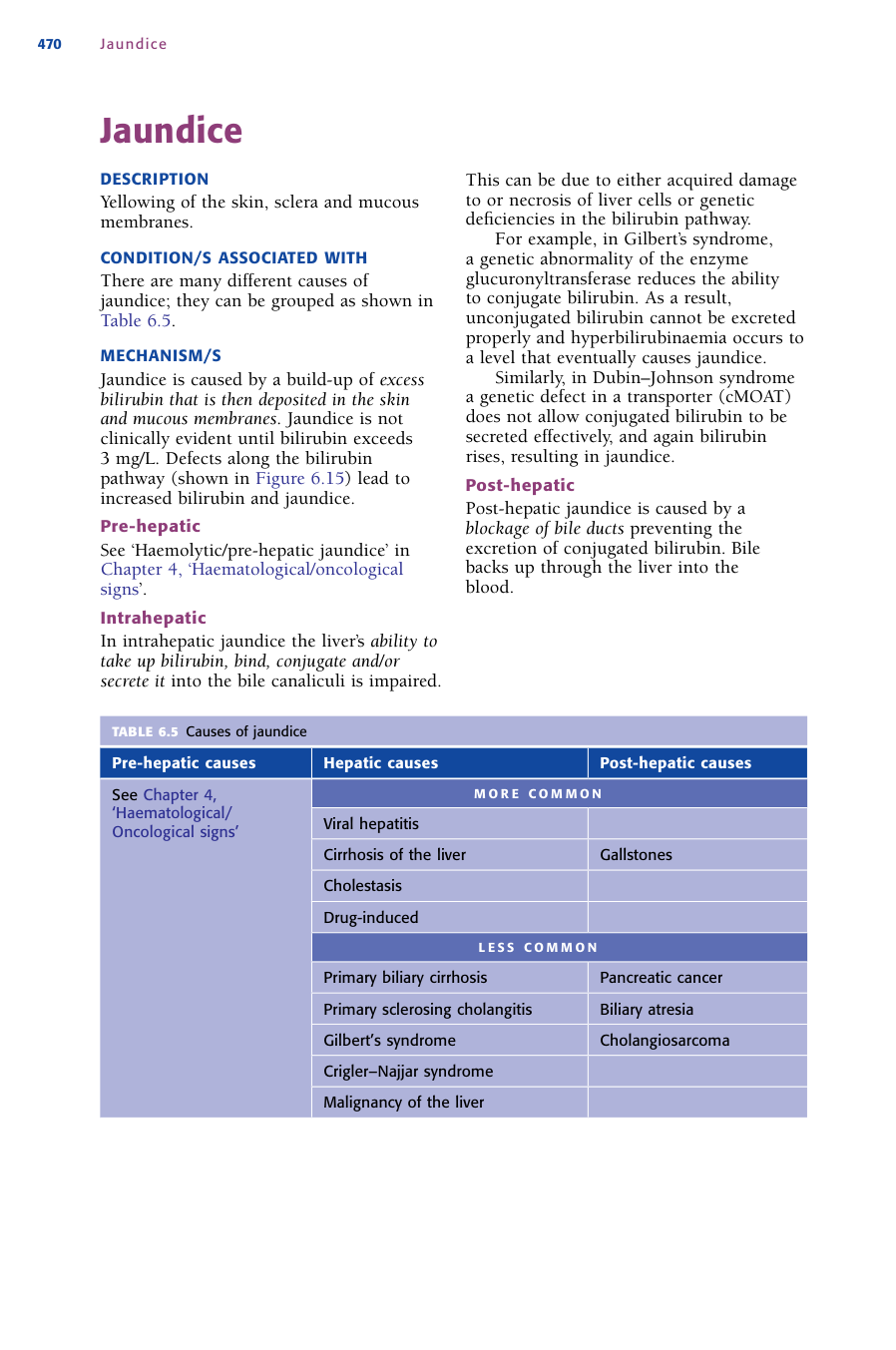
Nguyên nhân: Có nhiều nguyên nhân khác nhau gây vàng da; chúng có thể được phân loại như trong Bảng 6.5.
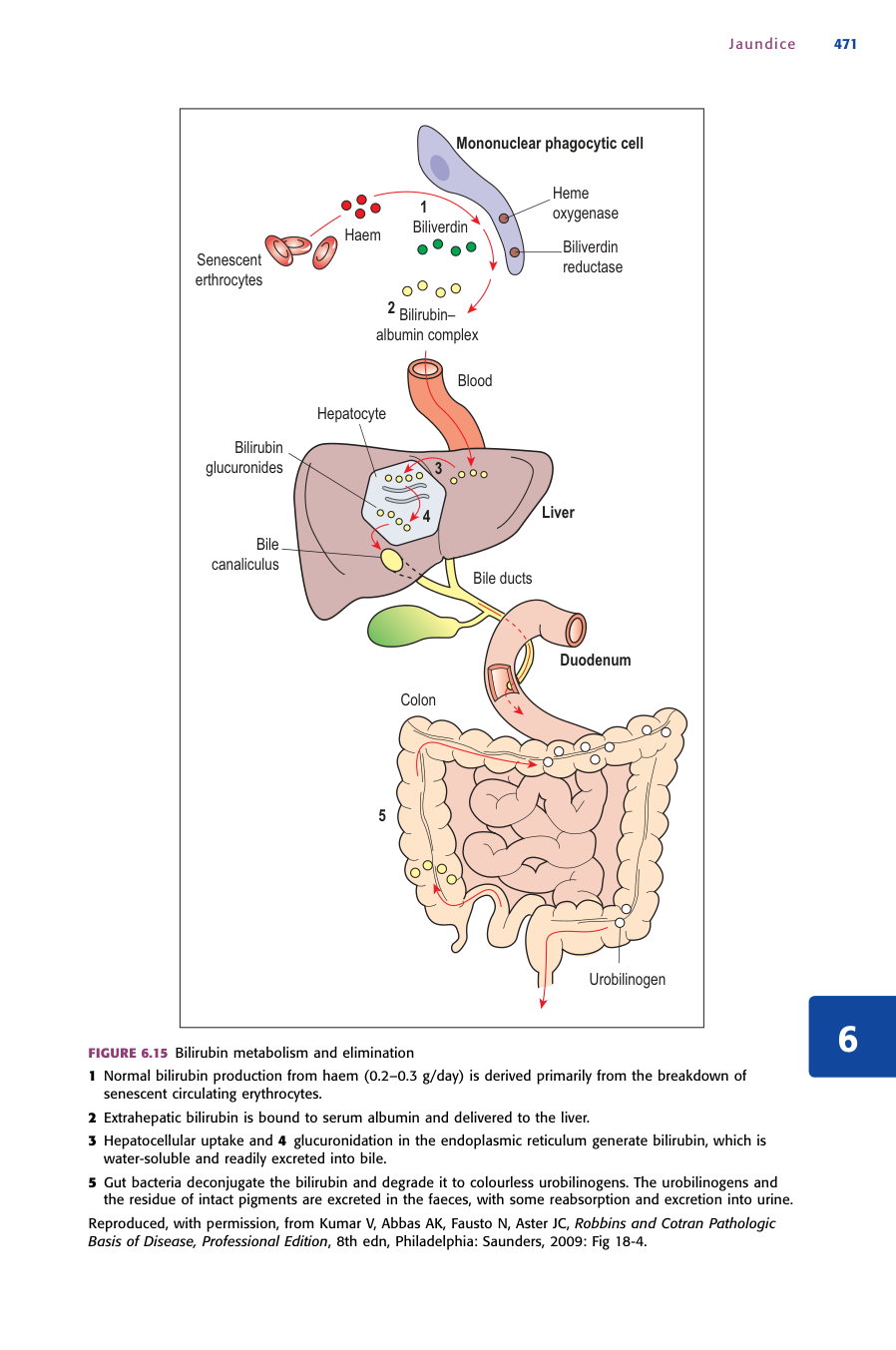
Cơ chế: Vàng da là do sự tích tụ bilirubin dư thừa, sau đó lắng đọng trong da và niêm mạc. Vàng da chỉ biểu hiện lâm sàng khi nồng độ bilirubin vượt quá 3 mg/dL. Các khiếm khuyết trong con đường chuyển hóa bilirubin (minh họa trong Hình 6.15) dẫn đến tăng bilirubin và gây vàng da.
Vàng da trước gan (Pre-hepatic jaundice): Tham khảo phần ‘Vàng da tán huyết trước gan’ trong Chương 4, ‘Các dấu hiệu huyết học và ung thư’.
Vàng da tại gan (Intrahepatic jaundice): Trong vàng da tại gan, khả năng của gan trong việc hấp thu bilirubin, liên kết, liên hợp và/hoặc bài tiết bilirubin vào các tiểu quản mật bị suy giảm. Điều này có thể do tổn thương mắc phải hoặc hoại tử tế bào gan, hoặc do các khiếm khuyết di truyền trong con đường chuyển hóa bilirubin. Ví dụ, trong hội chứng Gilbert, một bất thường di truyền của enzyme glucuronyltransferase làm giảm khả năng liên hợp bilirubin. Kết quả là, bilirubin không liên hợp không thể được bài tiết đúng cách và tăng bilirubin máu xảy ra đến mức cuối cùng gây ra vàng da. Tương tự, trong hội chứng Dubin–Johnson, một khiếm khuyết di truyền ở protein vận chuyển (cMOAT) không cho phép bilirubin liên hợp được bài tiết hiệu quả, và một lần nữa, bilirubin tăng lên, dẫn đến vàng da.
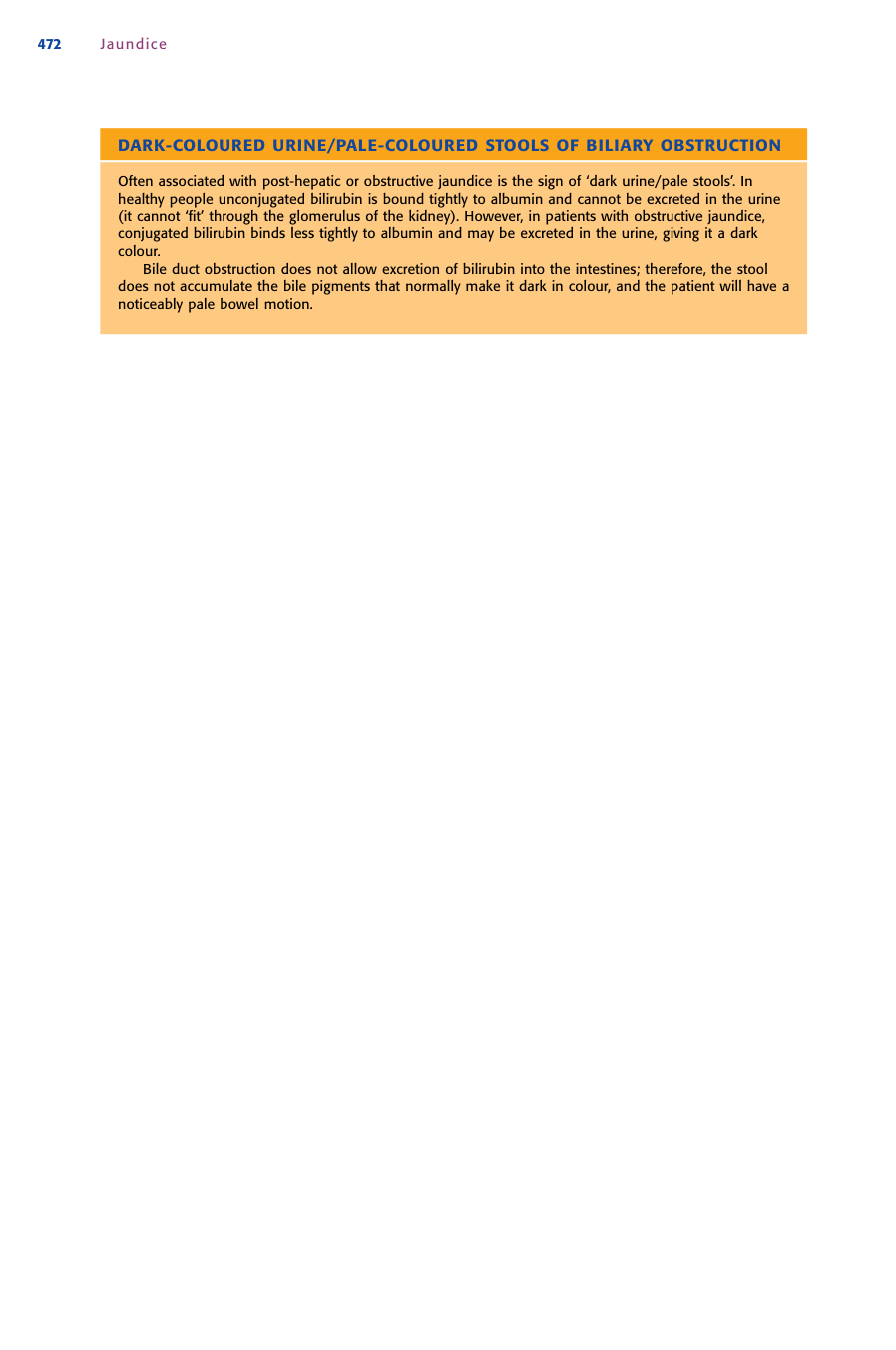
Vàng da sau gan (Post-hepatic jaundice): Vàng da sau gan là do tắc nghẽn ống mật, ngăn cản sự bài tiết bilirubin liên hợp. Mật ứ đọng ngược trở lại qua gan vào máu.
Các thành phần chính trong con đường chuyển hóa bilirubin (tham khảo Hình 6.15):
- Hồng cầu già (Senescent erythrocytes)
- Heme
- Enzyme heme oxygenase
- Tế bào thực bào đơn nhân (Mononuclear phagocytic cell)
- Enzyme biliverdin reductase
- Biliverdin
- Phức hợp bilirubin-albumin
- Bilirubin glucuronide (bilirubin liên hợp)
- Tế bào gan (Hepatocyte)
- Gan (Liver)
- Ống mật (Bile ducts)
- Tiểu quản mật (Bile canaliculus)
- Tá tràng (Duodenum)
- Urobilinogen
- Đại tràng (Colon)
- Máu (Blood)