


Bệnh não gan (Hepatic encephalopathy)
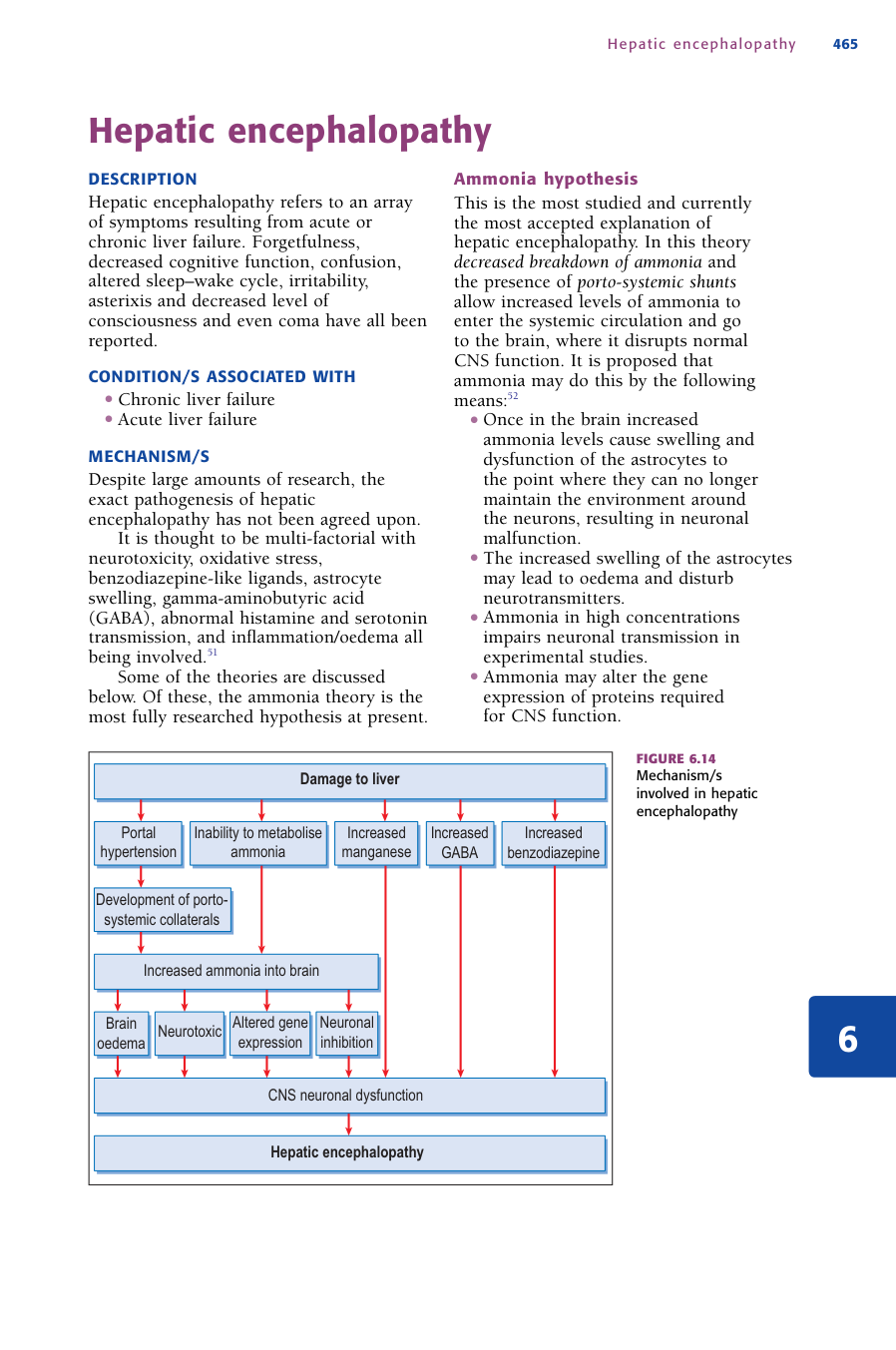
Mô tả: Hepatic encephalopathy refers to an array of symptoms resulting from acute or chronic liver failure. Forgetfulness, decreased cognitive function, confusion, altered sleep–wake cycle, irritability, asterixis and decreased level of consciousness and even coma have all been reported.
Nguyên nhân: • Chronic liver failure • Acute liver failure
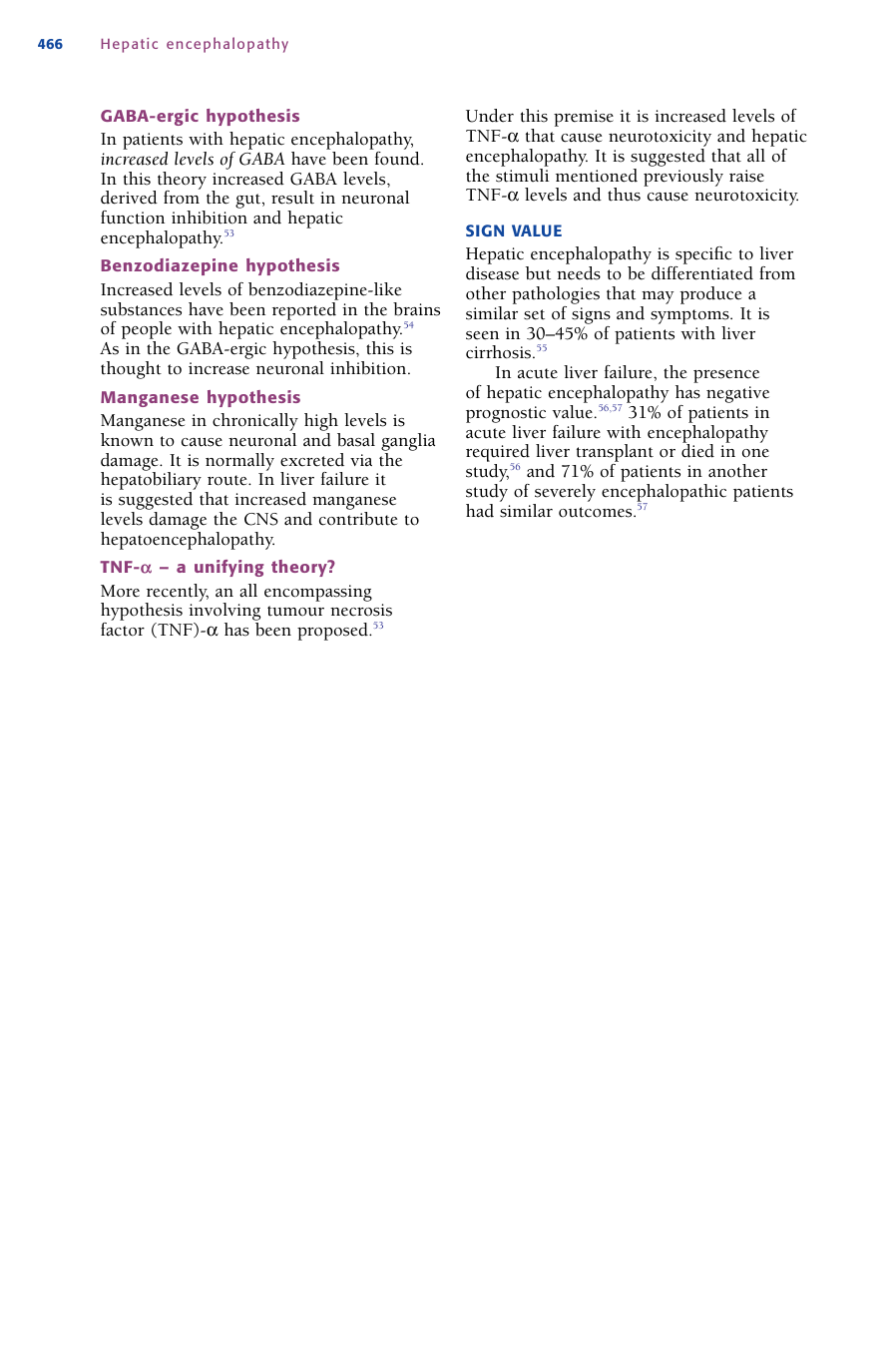
Cơ chế: involved in hepatic encephalopathy Despite large amounts of research, the exact pathogenesis of hepatic encephalopathy has not been agreed upon. It is thought to be multi-factorial with neurotoxicity, oxidative stress, benzodiazepine-like ligands, astrocyte swelling, gamma-aminobutyric acid (GABA), abnormal histamine and serotonin transmission, and inflammationoedema all being involved.51 Some of the theories are discussed below. Of these, the ammonia theory is the most fully researched hypothesis at present. Ammonia hypothesis This is the most studied and currently the most accepted explanation of hepatic encephalopathy. In this theory decreased breakdown of ammonia and the presence of porto-systemic shunts allow increased levels of ammonia to enter the systemic circulation and go to the brain, where it disrupts normal CNS function. It is proposed that ammonia may do this by the following means:52 • Once in the brain increased ammonia levels cause swelling and dysfunction of the astrocytes to the point where they can no longer maintain the environment around the neurons, resulting in neuronal malfunction. • The increased swelling of the astrocytes may lead to oedema and disturb neurotransmitters. • Ammonia in high concentrations impairs neuronal transmission in experimental studies. • Ammonia may alter the gene expression of proteins required for CNS function. Hepatic encephalopathy 466 GABA-ergic hypothesis In patients with hepatic encephalopathy, increased levels of GABA have been found. In this theory increased GABA levels, derived from the gut, result in neuronal function inhibition and hepatic encephalopathy.53 Benzodiazepine hypothesis Increased levels of benzodiazepine-like substances have been reported in the brains of people with hepatic encephalopathy.54 As in the GABA-ergic hypothesis, this is thought to increase neuronal inhibition. Manganese hypothesis Manganese in chronically high levels is known to cause neuronal and basal ganglia damage. It is normally excreted via the hepatobiliary route. In liver failure it is suggested that increased manganese levels damage the CNS and contribute to hepatoencephalopathy. TNF-α – a unifying theory? More recently, an all encompassing hypothesis involving tumour necrosis factor (TNF)-α has been proposed.53 Under this premise it is increased levels of TNF-α that cause neurotoxicity and hepatic encephalopathy. It is suggested that all of the stimuli mentioned previously raise TNF-α levels and thus cause neurotoxicity.
Ý nghĩa lâm sàng: Hepatic encephalopathy is specific to liver disease but needs to be differentiated from other pathologies that may produce a similar set of signs and symptoms. It is seen in 30–45% of patients with liver cirrhosis.55 In acute liver failure, the presence of hepatic encephalopathy has negative prognostic value.56,57 31% of patients in acute liver failure with encephalopathy required liver transplant or died in one study,56 and 71% of patients in another study of severely encephalopathic patients had similar outcomes.57