


Uvula deviation
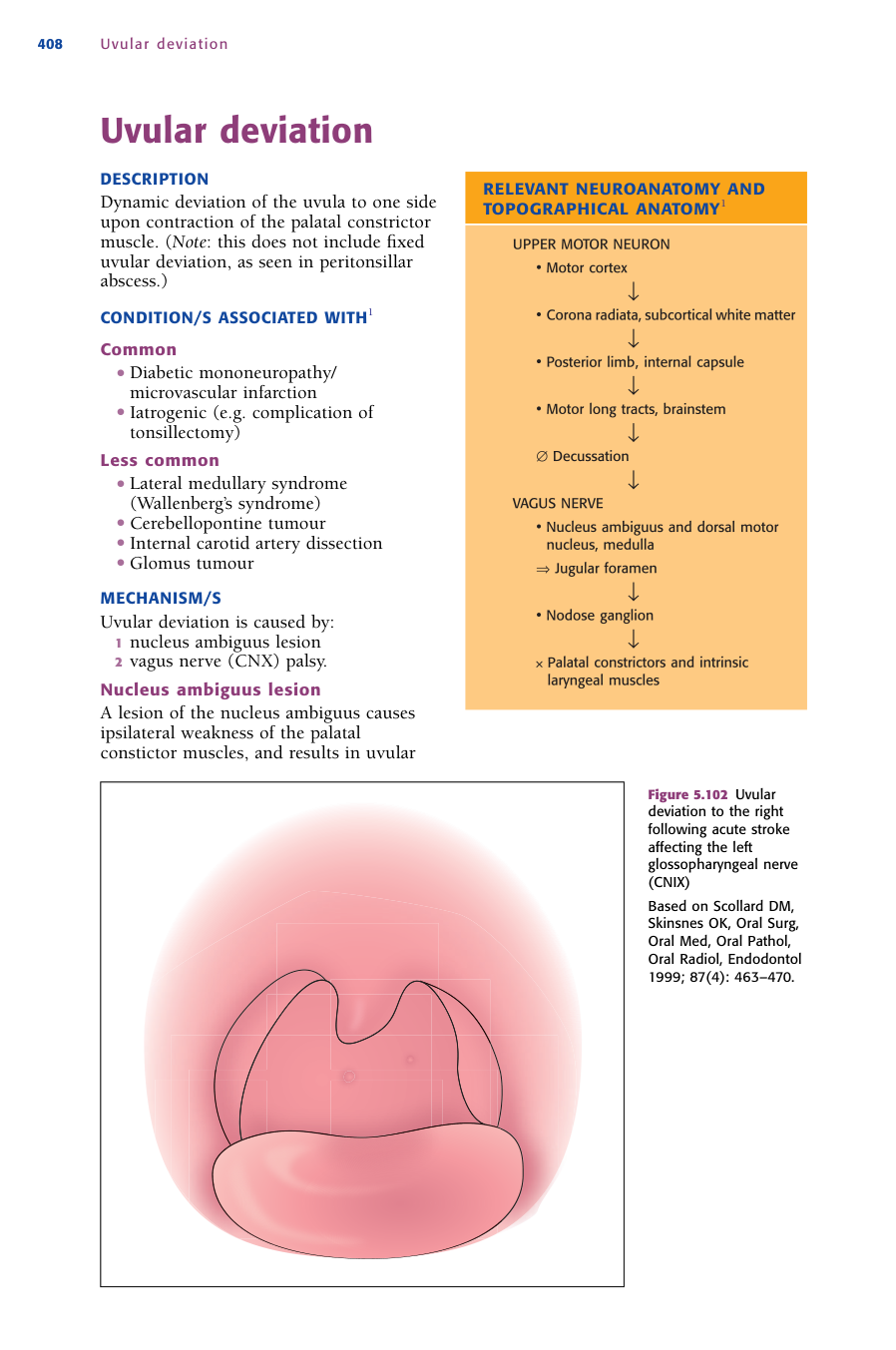
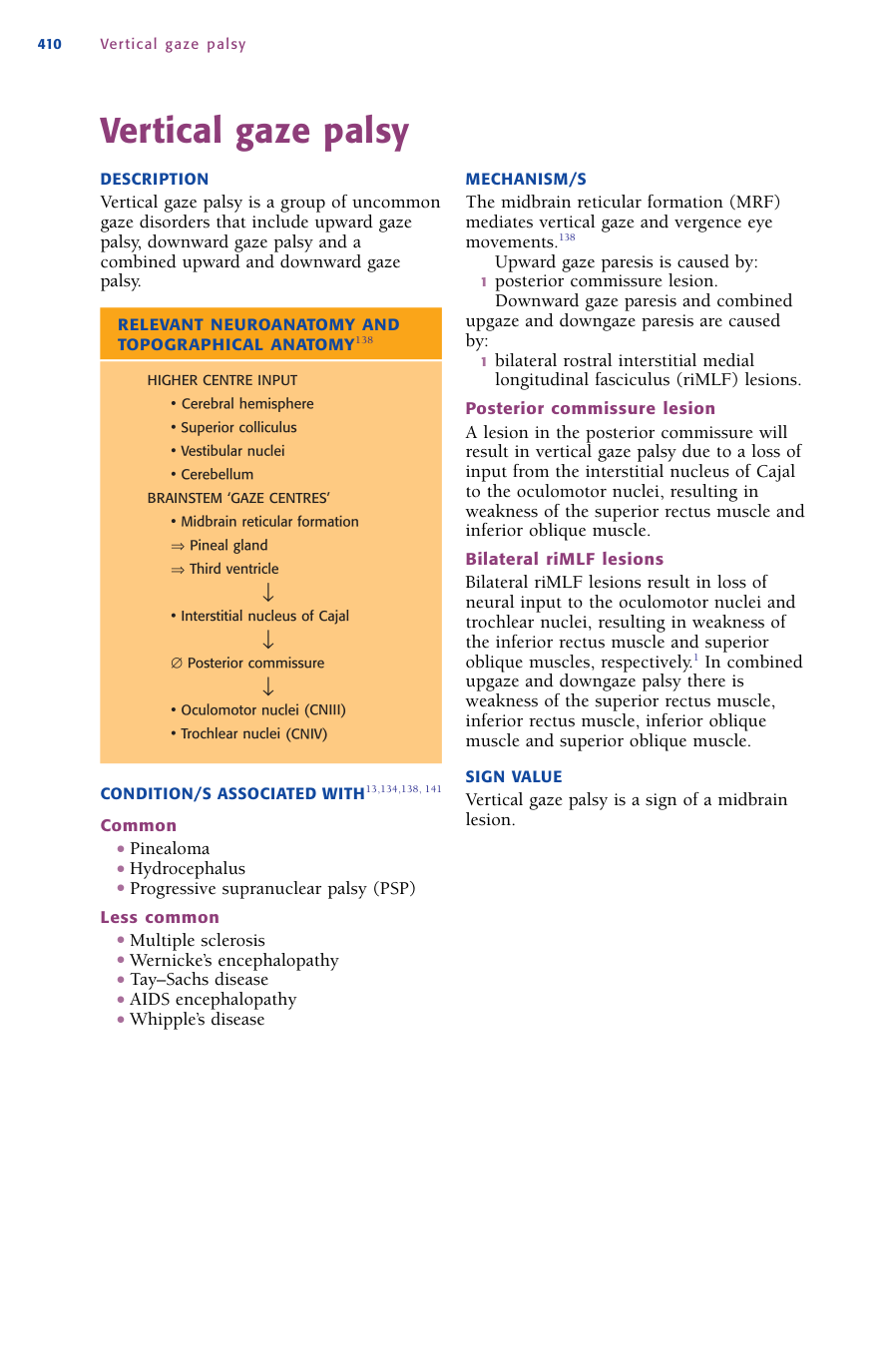
Mô tả: Dynamic deviation of the uvula to one side upon contraction of the palatal constrictor muscle. (Note: this does not include fixed uvular deviation, as seen in peritonsillar abscess.) Vertical gaze palsy is a group of uncommon gaze disorders that include upward gaze palsy, downward gaze palsy and a combined upward and downward gaze palsy. RELEVANT NEUROANATOMY AND TOPOGRAPHICAL ANATOMY138
Nguyên nhân: Common • Diabetic mononeuropathy microvascular infarction • Iatrogenic (e.g. complication of tonsillectomy) Less common • Lateral medullary syndrome (Wallenberg’s syndrome) • Cerebellopontine tumour • Internal carotid artery dissection • Glomus tumour Common • Pinealoma • Hydrocephalus • Progressive supranuclear palsy (PSP) Less common • Multiple sclerosis • Wernicke’s encephalopathy • Tay–Sachs disease • AIDS encephalopathy • Whipple’s disease
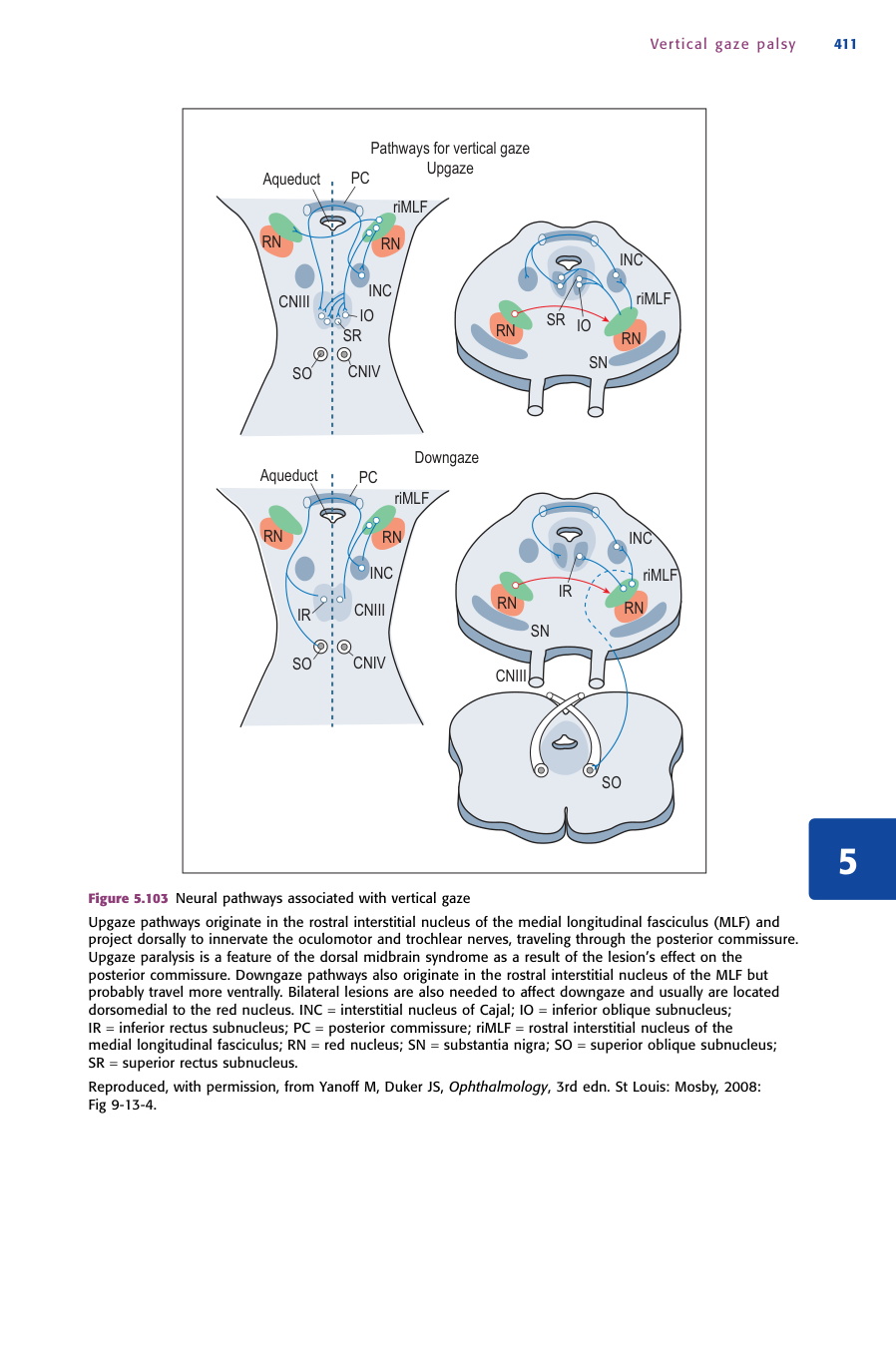
Cơ chế: Uvular deviation is caused by: 1 nucleus ambiguus lesion 2 vagus nerve (CNX) palsy. Nucleus ambiguus lesion A lesion of the nucleus ambiguus causes ipsilateral weakness of the palatal constictor muscles, and results in uvular Uvular deviation 409 deviation away from the side of the lesion. Causes include lateral medullary syndrome (Wallenberg’s syndrome), abscess and multiple sclerosis.1 Vagus nerve (CNX) palsy In vagus nerve palsy, ipsilateral weakness of the uvula and soft palate causes the uvula to deviate away from the affected side. Associated features include unilateral loss of pharyngeal and laryngeal sensation, unilateral loss of sensation in the external ear, dysphagia and hoarseness.1 Causes include trauma, cerebellopontine angle tumours, iatrogenic and glomus tumour. The midbrain reticular formation (MRF) mediates vertical gaze and vergence eye movements.138 Upward gaze paresis is caused by: 1 posterior commissure lesion. Downward gaze paresis and combined upgaze and downgaze paresis are caused by: 1 bilateral rostral interstitial medial longitudinal fasciculus (riMLF) lesions. Posterior commissure lesion A lesion in the posterior commissure will result in vertical gaze palsy due to a loss of input from the interstitial nucleus of Cajal to the oculomotor nuclei, resulting in weakness of the superior rectus muscle and inferior oblique muscle. Bilateral riMLF lesions Bilateral riMLF lesions result in loss of neural input to the oculomotor nuclei and trochlear nuclei, resulting in weakness of the inferior rectus muscle and superior oblique muscles, respectively.1 In combined upgaze and downgaze palsy there is weakness of the superior rectus muscle, inferior rectus muscle, inferior oblique muscle and superior oblique muscle.
Ý nghĩa lâm sàng: Dynamic uvular deviation is a sign of vagus nerve (CNX) palsy or a nucleus ambiguus lesion. Vertical gaze palsy 410 Vertical gaze palsy Vertical gaze palsy is a sign of a midbrain lesion. Vertical gaze palsy 411 Pathways for vertical gaze Upgaze Aqueduct Aqueduct Downgaze riMLF riMLF INC INC CNIII riMLF INC CNIV riMLF INC CNIII CNIII CNIV