


Marcus Gunn pupil (RAPD)
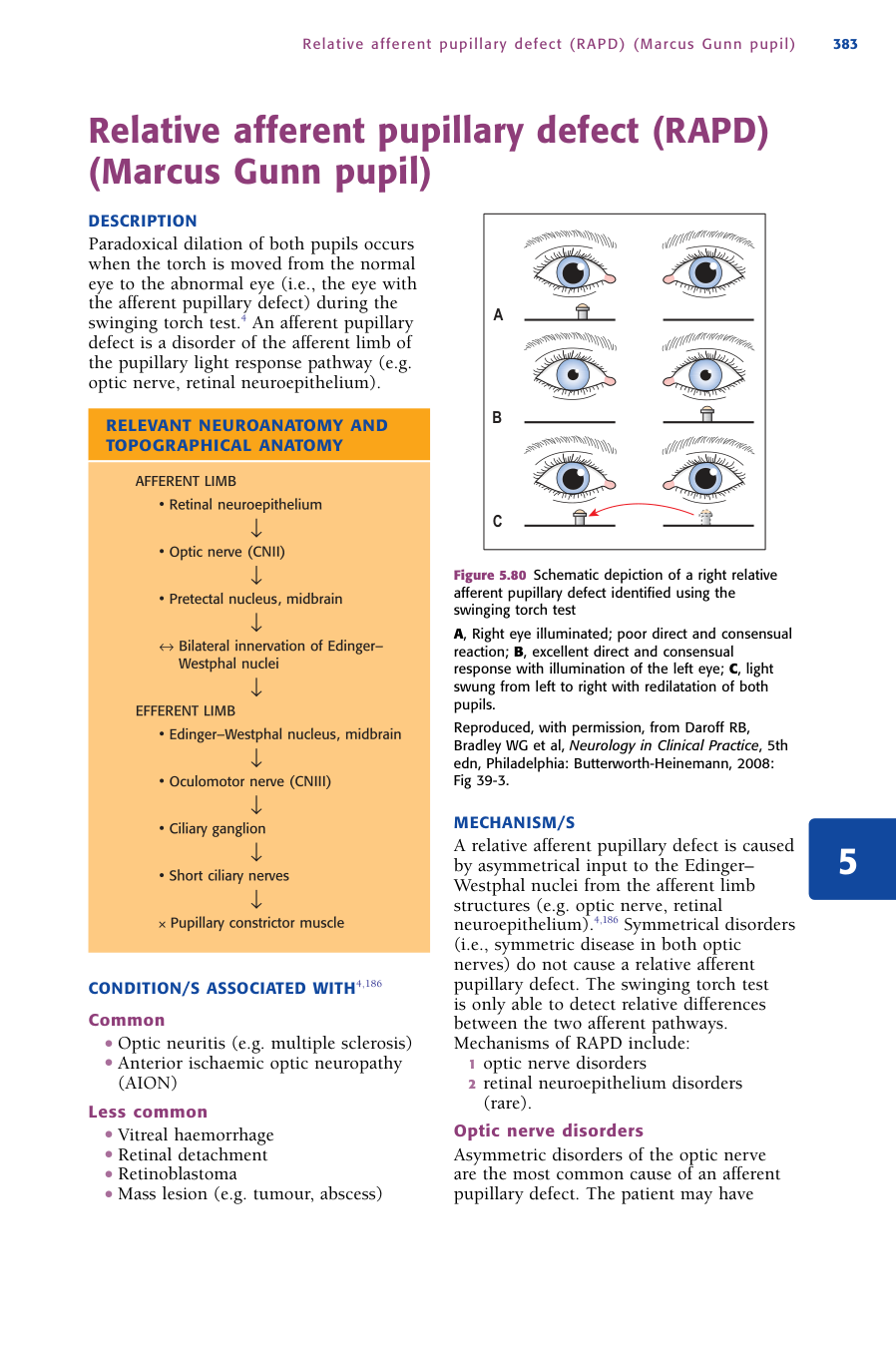
Mô tả: Paradoxical dilation of both pupils occurs when the torch is moved from the normal eye to the abnormal eye (i.e., the eye with the afferent pupillary defect) during the swinging torch test.4 An afferent pupillary defect is a disorder of the afferent limb of the pupillary light response pathway (e.g. optic nerve, retinal neuroepithelium). RELEVANT NEUROANATOMY AND TOPOGRAPHICAL ANATOMY
Nguyên nhân: Common • Optic neuritis (e.g. multiple sclerosis) • Anterior ischaemic optic neuropathy (AION) Less common • Vitreal haemorrhage • Retinal detachment • Retinoblastoma • Mass lesion (e.g. tumour, abscess)
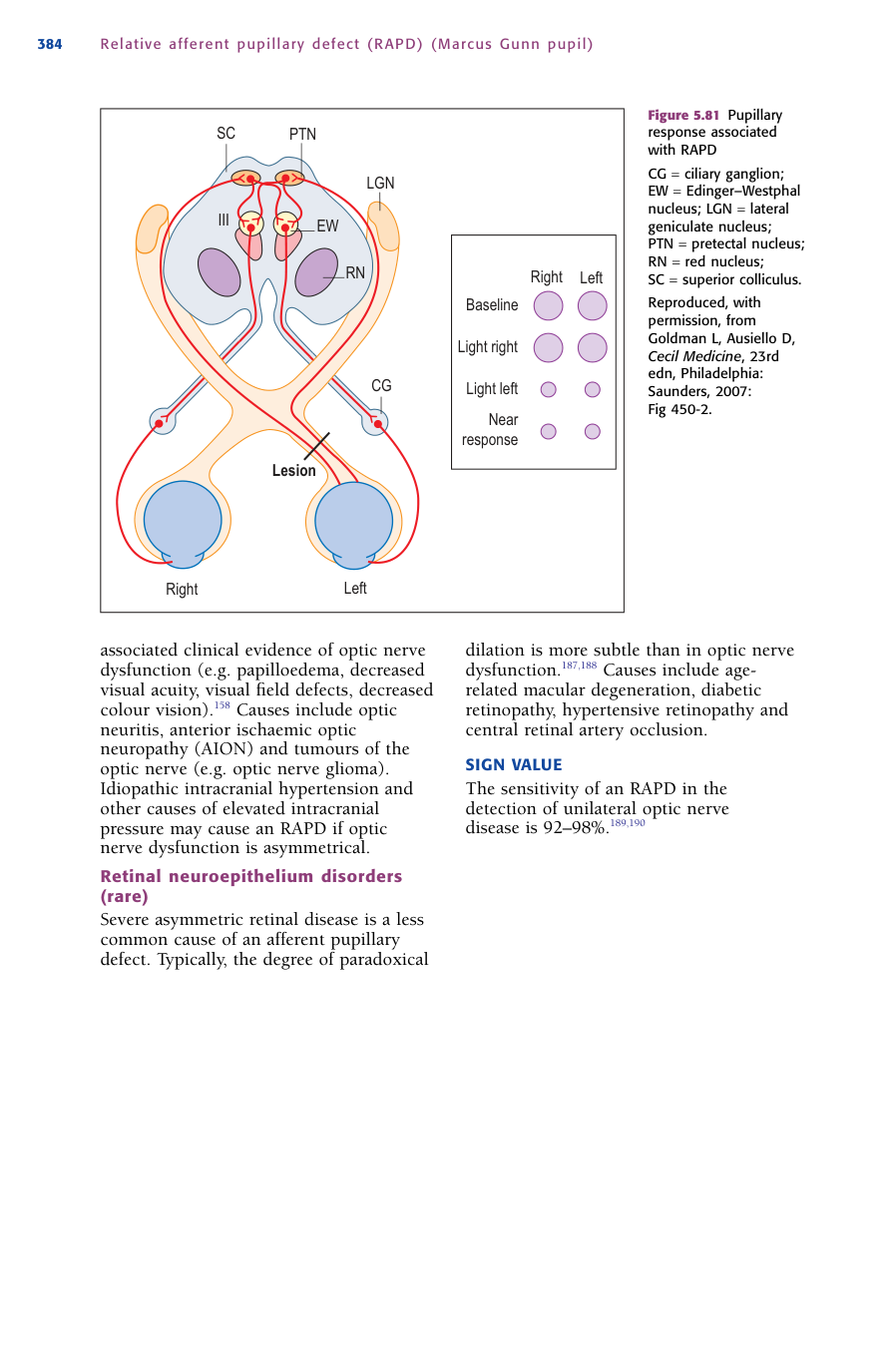
Cơ chế: A relative afferent pupillary defect is caused by asymmetrical input to the Edinger– Westphal nuclei from the afferent limb structures (e.g. optic nerve, retinal neuroepithelium).4,186 Symmetrical disorders (i.e., symmetric disease in both optic nerves) do not cause a relative afferent pupillary defect. The swinging torch test is only able to detect relative differences between the two afferent pathways. 1 optic nerve disorders 2 retinal neuroepithelium disorders (rare). Optic nerve disorders Asymmetric disorders of the optic nerve are the most common cause of an afferent pupillary defect. The patient may have Relative afferent pupillary defect (RAPD) (Marcus Gunn pupil) 384 associated clinical evidence of optic nerve dysfunction (e.g. papilloedema, decreased visual acuity, visual field defects, decreased colour vision).158 Causes include optic neuritis, anterior ischaemic optic neuropathy (AION) and tumours of the optic nerve (e.g. optic nerve glioma). Idiopathic intracranial hypertension and other causes of elevated intracranial pressure may cause an RAPD if optic nerve dysfunction is asymmetrical. Retinal neuroepithelium disorders (rare) Severe asymmetric retinal disease is a less common cause of an afferent pupillary defect. Typically, the degree of paradoxical Baseline Light right Light left Near response Right Right Left Left III LGN PTN Lesion
Ý nghĩa lâm sàng: The sensitivity of an RAPD in the detection of unilateral optic nerve disease is 92–98%.189,190