


Dysmetria
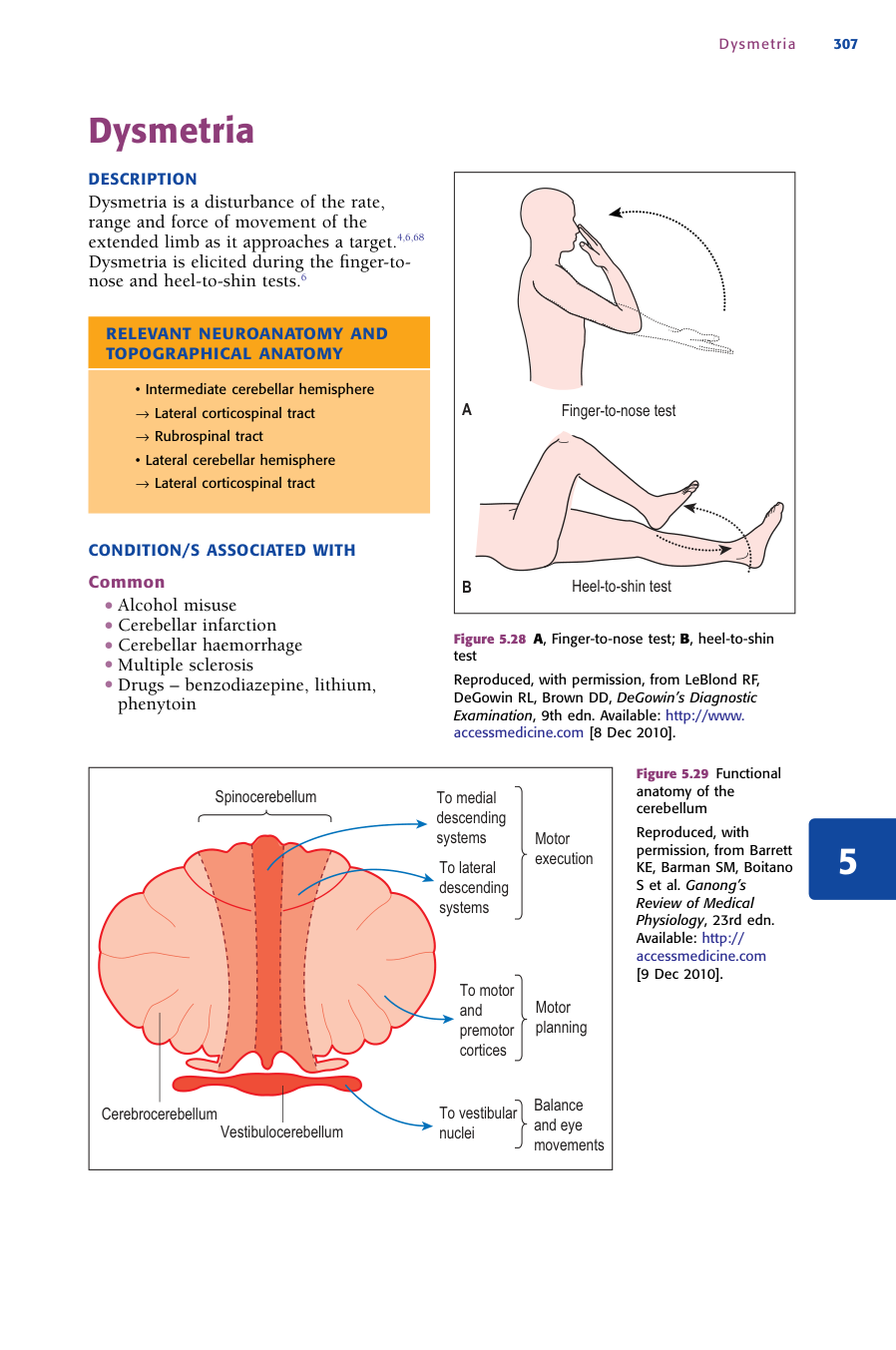
Mô tả: Dysmetria is a disturbance of the rate, range and force of movement of the extended limb as it approaches a target.4,6,68 Dysmetria is elicited during the finger-to- nose and heel-to-shin tests.6
Nguyên nhân: Common • Alcohol misuse • Cerebellar infarction • Cerebellar haemorrhage • Multiple sclerosis • Drugs – benzodiazepine, lithium, phenytoin Dysmetria 308 Less common • Mass lesion (e.g. tumour, abscess, AVM) • Hereditary cerebellar degeneration (e.g. Friedreich’s ataxia) • Paraneoplastic cerebellar degeneration
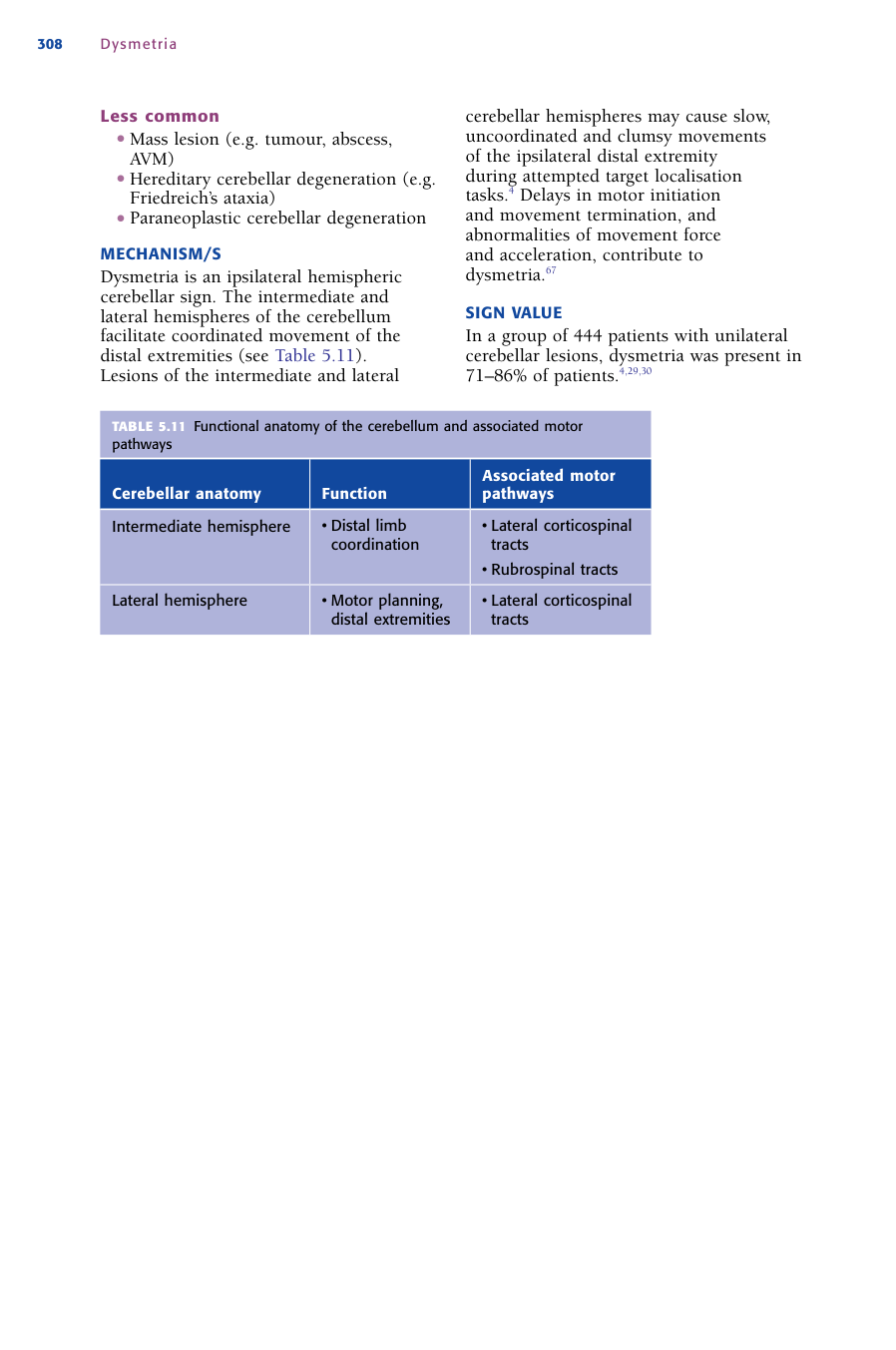
Cơ chế: Dysmetria is an ipsilateral hemispheric cerebellar sign. The intermediate and lateral hemispheres of the cerebellum facilitate coordinated movement of the distal extremities (see Table 5.11). Lesions of the intermediate and lateral TABLE 5.11 Functional anatomy of the cerebellum and associated motor pathways Cerebellar anatomy Function Associated motor pathways Intermediate hemisphere • Distal limb coordination • Lateral corticospinal tracts • Rubrospinal tracts Lateral hemisphere • Motor planning, distal extremities • Lateral corticospinal tracts cerebellar hemispheres may cause slow, uncoordinated and clumsy movements of the ipsilateral distal extremity during attempted target localisation tasks.4 Delays in motor initiation and movement termination, and abnormalities of movement force and acceleration, contribute to dysmetria.67
Ý nghĩa lâm sàng: In a group of 444 patients with unilateral cerebellar lesions, dysmetria was present in 71–86% of patients.4,29,30