


Gag reflex
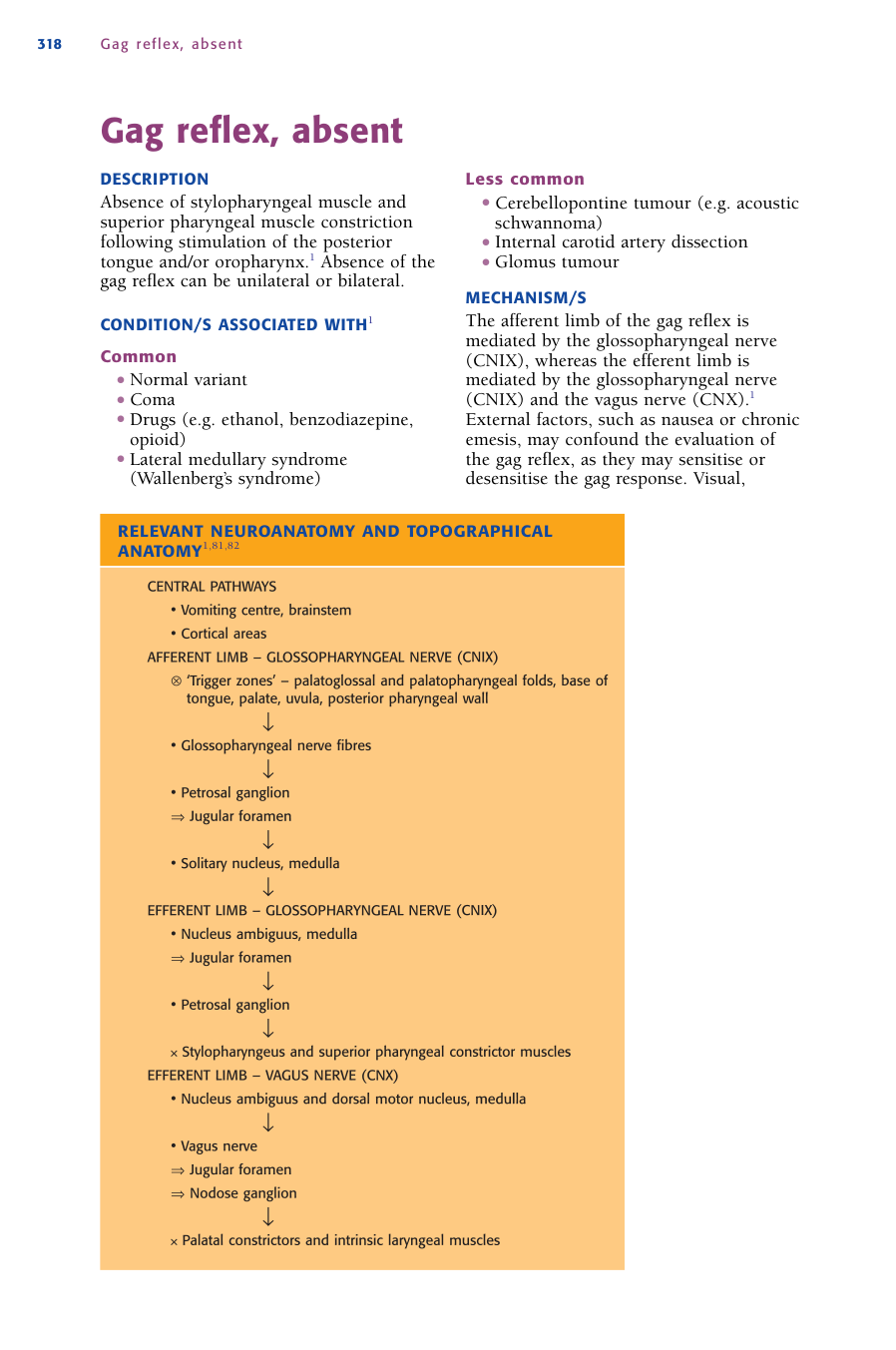
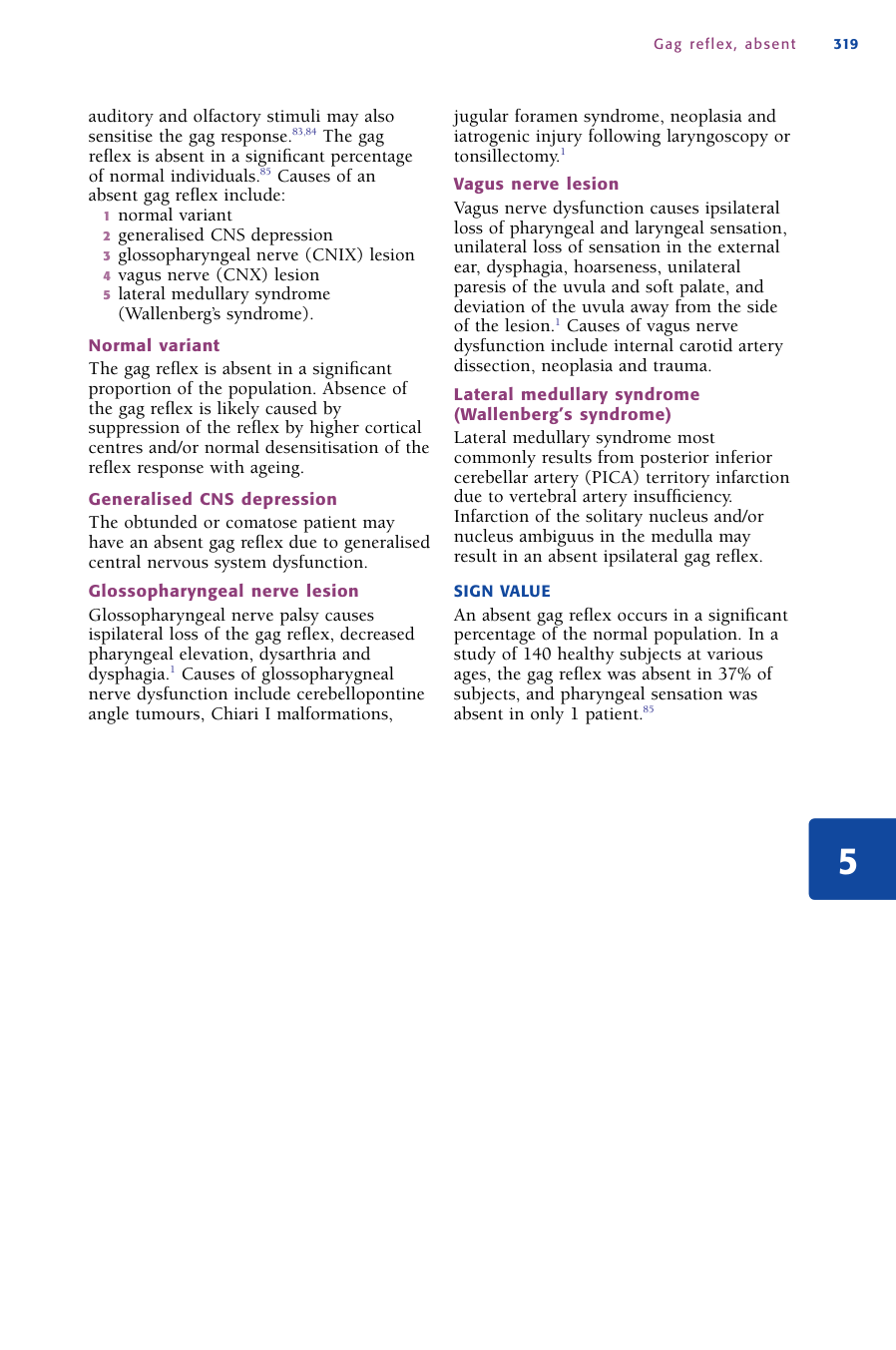
Mô tả: Absence of stylopharyngeal muscle and superior pharyngeal muscle constriction following stimulation of the posterior tongue andor oropharynx.1 Absence of the gag reflex can be unilateral or bilateral. RELEVANT NEUROANATOMY AND TOPOGRAPHICAL ANATOMY1,81,82 Less common • Cerebellopontine tumour (e.g. acoustic schwannoma) • Internal carotid artery dissection • Glomus tumour
Nguyên nhân: Common • Normal variant • Coma • Drugs (e.g. ethanol, benzodiazepine, opioid) • Lateral medullary syndrome (Wallenberg’s syndrome)
Cơ chế: The afferent limb of the gag reflex is mediated by the glossopharyngeal nerve (CNIX), whereas the efferent limb is mediated by the glossopharyngeal nerve (CNIX) and the vagus nerve (CNX).1 External factors, such as nausea or chronic emesis, may confound the evaluation of the gag reflex, as they may sensitise or desensitise the gag response. Visual, Gag reflex, absent 319 auditory and olfactory stimuli may also sensitise the gag response.83,84 The gag reflex is absent in a significant percentage of normal individuals.85 Causes of an absent gag reflex include: 1 normal variant 2 generalised CNS depression 3 glossopharyngeal nerve (CNIX) lesion 4 vagus nerve (CNX) lesion 5 lateral medullary syndrome (Wallenberg’s syndrome). Normal variant The gag reflex is absent in a significant proportion of the population. Absence of the gag reflex is likely caused by suppression of the reflex by higher cortical centres andor normal desensitisation of the reflex response with ageing. Generalised CNS depression The obtunded or comatose patient may have an absent gag reflex due to generalised central nervous system dysfunction. Glossopharyngeal nerve lesion Glossopharyngeal nerve palsy causes ispilateral loss of the gag reflex, decreased pharyngeal elevation, dysarthria and dysphagia.1 Causes of glossopharygneal nerve dysfunction include cerebellopontine angle tumours, Chiari I malformations, jugular foramen syndrome, neoplasia and iatrogenic injury following laryngoscopy or tonsillectomy.1 Vagus nerve lesion Vagus nerve dysfunction causes ipsilateral loss of pharyngeal and laryngeal sensation, unilateral loss of sensation in the external ear, dysphagia, hoarseness, unilateral paresis of the uvula and soft palate, and deviation of the uvula away from the side of the lesion.1 Causes of vagus nerve dysfunction include internal carotid artery dissection, neoplasia and trauma. Lateral medullary syndrome (Wallenberg’s syndrome) Lateral medullary syndrome most commonly results from posterior inferior cerebellar artery (PICA) territory infarction due to vertebral artery insufficiency. Infarction of the solitary nucleus andor nucleus ambiguus in the medulla may result in an absent ipsilateral gag reflex.
Ý nghĩa lâm sàng: An absent gag reflex occurs in a significant percentage of the normal population. In a study of 140 healthy subjects at various ages, the gag reflex was absent in 37% of subjects, and pharyngeal sensation was absent in only 1 patient.85